Building a Halloween costume from your own closet starts with a ten minute audit and one strong detail, such as a pointed hat or a bandana. The guide matches five base outfits to adult and kids ideas, then covers face paint versus masks. A reusable checklist helps readers review safety before leaving the house.
Key Takeaways
- Use face paint instead of a mask for children walking in the dark.
- Test face paint on the arm a couple of days before using it.
- Keep capes short and sleeves snug, since loose fabric is likelier to touch flames.
- Add one bright or reflective piece and carry a flashlight after dark.
Halloween is close, you have no costume, and a shopping trip is the last thing you want. You may not need one. A last minute Halloween costume from your closet can come together in a single evening, using only clothes you already own.
This guide shows you how to look at your wardrobe the way a costume designer would, then match what you find to a character. It gives ideas for adults and kids, a straight answer on face paint versus masks, and the safety checks to run before anyone steps outside in the dark. A timeline and a reusable checklist tell you what to do tonight and what to check at the door. Start tonight, and you can walk out on Halloween in a finished costume.
Look at your closet like a costume designer
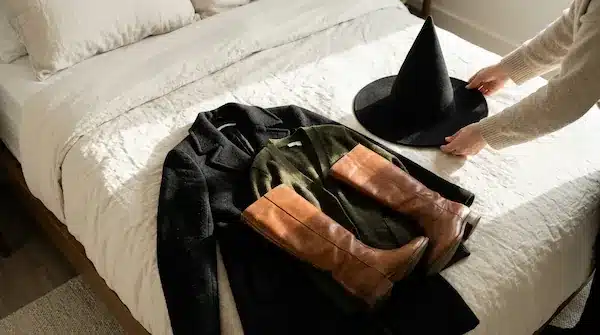
A ten minute audit is enough to find the base of a costume. Pull out anything with a strong colour or an odd shape, such as a long coat or a pair of tall boots, and lay it on the bed. Do not try anything on yet, because the only job is to see your options side by side. Ten minutes, one pile and no trying on is the whole audit.
Four things to look for
- Colour. One strong colour is easy to read from a distance, so black, white, orange and green items make good bases.
- Layers. A waistcoat, jacket or long cardigan over a plain top changes your outline.
- Accessories. Hats, belts, scarves and gloves signal a character faster than the clothes underneath.
- One strong detail. Every costume needs a single thing that says who you are.
Pick one detail and let it carry the costume. A pointed hat says witch, a bandana says cowboy, and a white painted face says mime. Everything else can stay plain, because one clear idea beats a busy outfit nobody can read. Choose a single signal and keep the rest quiet.
Borrowing can fill the last gap in a no buy Halloween costume. A neighbour’s hat, a sibling’s boots or a belt from last year’s costume box can complete a look your own wardrobe cannot. DIY Halloween costumes from home can include one borrowed piece without breaking the idea. So when one piece is missing, ask who nearby already owns it.
Choose a last minute Halloween costume from your closet by base outfit
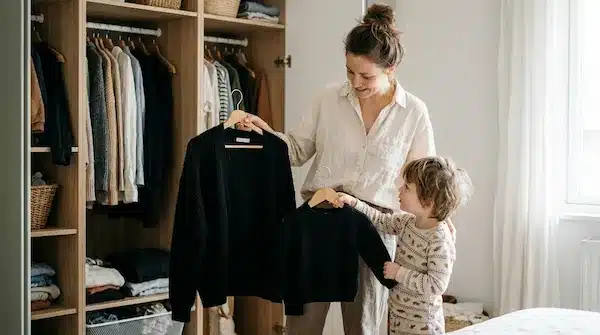
Five bases are worth checking for first: a black outfit, a striped top, a white shirt, flannel and denim, or old formal wear. Each one below comes with an idea for adults and one for kids, so a single pile of clothes can cover last minute kids Halloween costumes and adult looks alike. These Halloween costume ideas with clothes you own need no sewing. Find your base, then borrow the idea that fits.
Black clothes: witch, cat or skeleton
A Halloween costume from black clothes is a good place to start, because black fits a long list of spooky characters. Adults can roll a pointed hat from black card for a witch, or paint a skeleton face over an all black outfit. Kids can wear black leggings and a black top as a cat, with whiskers drawn on the cheeks and card ears taped to a headband they already own. One added detail is all black needs.
Striped top: sailor, mime or pirate
A striped top becomes a character as soon as you add the right neckwear or headwear. Pair it with white trousers and a knotted scarf for a sailor, or with a beret and white face paint for a mime. For a child pirate, tie a scarf over the hair and draw the eye patch on with face paint. Stripes plus one accessory does the job.
White shirt: vampire, scientist or ghost
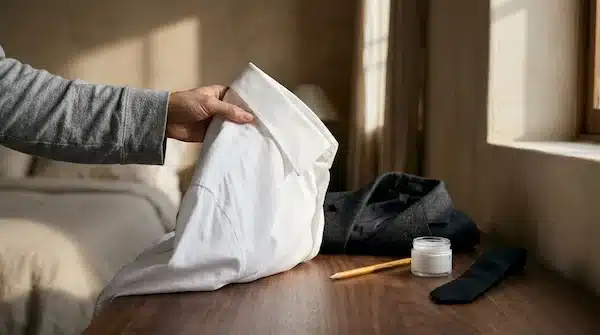
A white shirt can turn into three different characters, depending on what goes over it. Turn up the collar and add a dark jacket and pale face paint for a vampire, or wear it open like a lab coat with a pencil behind the ear for a scientist. A small ghost can wear a white top and trousers with a white painted face, which keeps the hem well off the ground. Choose the character by what you can add on top.
Flannel and denim: cowboy, lumberjack or scarecrow
Flannel and denim already look like workwear, so they suit a cowboy, a lumberjack or a scarecrow. Add a bandana and belt for the cowboy, or a woolly hat and boots for the lumberjack. For a scarecrow, wear mismatched colours and draw rosy cheeks and stitch lines with face paint. Kids can wear the same outfits in their own sizes, and everyday workwear needs only a hat or a painted face to become a character.
Old formal wear: undertaker, zombie guest or detective
Old formal wear makes strong costumes because it already looks like a character. A black suit, white shirt and pale face paint make an undertaker, and a prom or bridesmaid dress with messy hair and grey green face paint makes a zombie party guest, as long as the hem clears the ground. A child in a blazer and tie, carrying a notebook, becomes a small detective. Formal clothes need only a few details to tell a story.
Face paint or a mask: when paint is the better choice
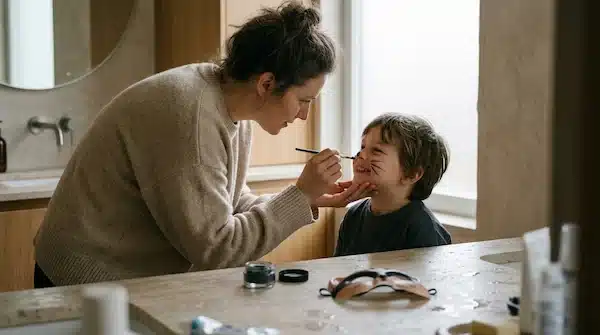
Use face paint instead of a mask for any child walking in the dark. The US Consumer Product Safety Commission (CPSC) lists masks that obscure vision among the dangers of Halloween, and it has suggested non toxic face paint or makeup as an alternative. The US Food and Drug Administration (FDA) gives similar advice: wear makeup and hats rather than masks that can block your view. Paint keeps a child’s view open, which a mask cannot promise.
Masks can still work at a lit indoor party if they pass two tests. CPSC says masks, hats and scarves must fit securely so they do not slip over the eyes, and the National Fire Protection Association (NFPA) says the eye holes in a child’s mask must be large enough to see out of. Skip any mask that fails either test. A mask is fine only when you can see out of it and it stays put.
How to test and choose face paint
- Patch test tonight. The FDA advises putting a small amount on the arm a couple of days ahead. Rash, redness or swelling means you may be allergic.
- Read the label. The FDA says the colours in face paint must be approved for cosmetic use. If a label says not to use it near the eyes, follow that, even when the packaging shows people wearing it there.
- Use paint made for skin. Pick a product whose label says it is for use on skin, and leave craft paint, markers and pens in the drawer.
- Do not share. The American Academy of Pediatrics advises against sharing makeup and says to wash your hands before applying it.
- Use what you own. Adults can draw whiskers, stitches and cracks with eyeliner and lip colour already in the makeup bag. If there is no face paint in the house, build a child’s look on clothes and a hat, and skip the mask.
Safety checks before you leave the house
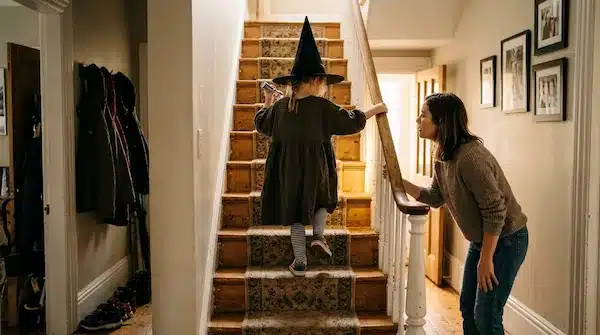
A cape that looks great in the hallway can still catch on a stair rail or a candle, so a short safety check comes before the photos. CPSC links Halloween injuries to falls, burns from flammable costumes, and scrapes from sharp objects on costumes and masks, and each check below answers one of those. Five minutes here is worth more than five minutes of extra decoration. Spend the last minutes on safety rather than another accessory.
Fit: walk in it first
The first test is whether you can walk in the costume. CPSC says costumes should fit well and not drag on the ground. Put on the full costume with shoes, go up and down a flight of stairs, and tuck any long hem into boots or swap in shorter trousers. Keep sharp pins off the outside of the costume. If the stairs feel easy, the fit passes.
Visibility: be seen as well as scary
A dark costume is easy to build from a closet but harder for drivers to see. CPSC advises costumes that are light and bright, reflective tape that glows in car headlights, light coloured treat bags or bags with reflective tape, and a flashlight so children can see and be seen. A reflective strip on a coat or backpack you already own can be worn or carried over the costume. Add one bright or reflective piece, and carry a flashlight.
Flame: keep fabric and fire apart
A costume put together at home has no flame resistance label to check. In the US, CPSC says the Flammable Fabrics Act requires costumes sold in shops to be flame resistant, and for costumes made at home it suggests fabrics that resist burning, such as nylon and polyester. The care label inside your own clothes shows which fabric you have. Without a costume label, that care label is the best clue you get.
Loose shapes are more likely to meet a flame than snug ones. CPSC says baggy sleeves and billowing skirts are more likely to touch a candle than tighter clothing, and NFPA advises avoiding billowing or long trailing fabric. Keep capes short and leave long scarves at home. Snug and short is the safer way to wear a closet costume.
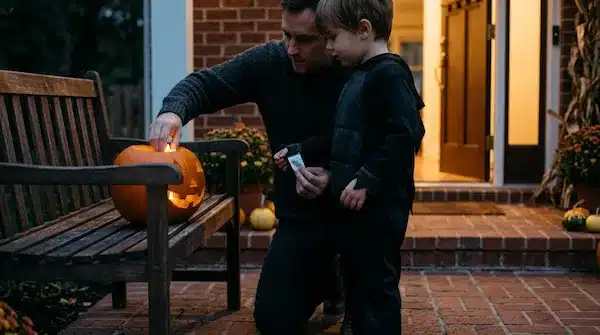
A lit pumpkin on a doorstep puts a flame exactly where costumes brush past. CPSC says to keep candlelit jack o lanterns away from landings and doorsteps, and NFPA says a flashlight or battery operated candle is the safest light for a pumpkin. NFPA also says children should know how to stop, drop and roll if their clothing catches fire. Battery lights keep the flame out of reach of any costume.
Battery doors on light up pieces
Light up pieces need a secure battery door before they go anywhere near a child. A swallowed button battery can burn tissue inside the body in as little as two hours, according to Consumer Reports. Product Safety Australia advises checking that the cover is screwed shut or needs two separate movements to open, and keeping spare button batteries out of children’s reach. Consumer Reports found a light up costume skirt whose battery compartment opened with one hand and no tools. If the door pops open easily, leave that piece out of the costume.
A last minute timeline: tonight, tomorrow and Halloween day
Tonight
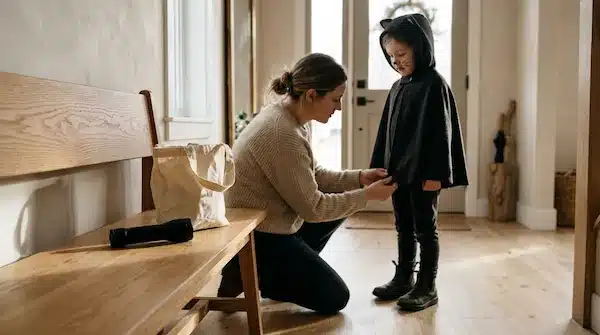
Tonight is for the jobs that take time. Run the ten minute audit, choose your base, and put the full costume on once to check the fit. Start the patch test on your arm, and check any light up piece for a secure battery door. If Halloween is tomorrow, test tonight anyway and skip the paint if your skin reacts. Get the slow jobs done now.
Tomorrow
Tomorrow is for fixing gaps. Borrow the missing hat, shorten any hem that touches the floor, and practise the face paint once so you know how long it takes. Cut card ears or a hat shape and try them on. By the end of the day, the costume should be complete.
Halloween day
On the day, put the costume on first and paint last. That order stops collars and sleeves from smudging the face, and it leaves the final minutes free for checks. Keep the flashlight and any treat bag by the door so nothing is forgotten. The day itself is only dressing, painting and checking.
Ten minute check before you leave
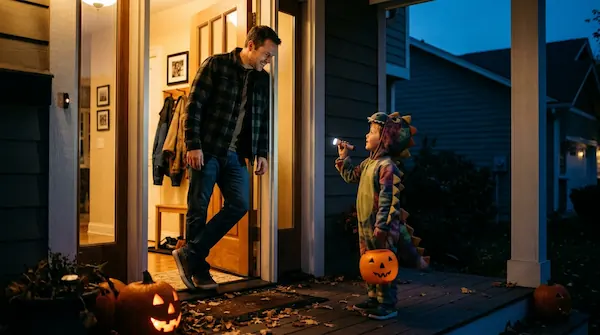
A ten minute check at the door catches what the earlier steps missed. Do it with the full costume on, shoes laced and the bag in hand, and save the list to reuse every year. Run every line before the door closes.
- Fit: you can climb stairs in it and no hem touches the floor.
- Sight: you can see to both sides and downward with any mask or paint on.
- Visibility: something light, bright or reflective is on you and on the bag.
- Light: the flashlight works and is in your hand or pocket.
- Fire: capes, sleeves and skirts are short or snug, and you plan to give lit pumpkins a wide berth.
- Skin: paint is only on skin that passed the patch test, and away from the eyes unless the label allows it.
- Batteries: every light up piece has a screwed shut battery door, or one that needs two separate movements to open, and spares are put away.
Questions people ask
What is a no buy Halloween costume?
A no buy Halloween costume uses only what is already in your home or borrowed from people you know. Start with one outfit you own, add a single recognisable detail, such as a hat or a belt, and finish with makeup you already have. Last year’s costume pieces count. If one item is missing, ask a friend or neighbour before you drop the idea.
What are easy last minute Halloween costumes for kids?
Start from something your child already wears in one strong colour, then add one prop or a painted face. An orange top and a green hat with a small stub on top make a pumpkin, and a yellow top with black trousers and card wings taped to the back makes a bee. Keep hems off the ground and skip any mask that blocks the view. One clear idea beats a pile of pieces.
What Halloween costume can I make from black clothes?
Black works for a bat or a cat burglar, as well as the witch and cat above. A bat needs card wings taped to the back of a black top. A cat burglar needs a dark beanie and a bag marked “loot”. Add something pale or reflective so drivers can see you after dark, since CPSC advises bright or reflective items for night walking.
Is face paint safer than a mask for Halloween?
Paint avoids the vision problem that masks can cause, which is why CPSC and the FDA both point to makeup instead. It can still irritate skin, so put a small amount on your arm a couple of days ahead and watch for rash, redness or swelling. Keep it away from the eyes unless the label says it is safe there, and never share it between people.
What are good face paint Halloween costume ideas?
Try a zombie with grey green skin and darker shading under the cheekbones. A pumpkin face needs only an orange base and a drawn on grin. For a quick extra, a spiderweb across one cheek suits almost any dark top. None of these needs a mask. Draw lightly first, then deepen the lines once you like the shape.
Summary
The blog covers how to build a Halloween costume from clothes already at home, starting with a ten minute closet audit. It matches five bases to characters: black clothes for a witch, cat or skeleton, a striped top for a sailor, mime or pirate, a white shirt for a vampire, scientist or ghost, flannel and denim for a cowboy, lumberjack or scarecrow, and old formal wear for an undertaker, zombie guest or detective.
The standout idea is to let one strong detail carry the costume, such as a pointed hat for a witch or a bandana for a cowboy. The blog also explains why face paint suits children walking in the dark better than a mask. The CPSC lists masks that block vision among Halloween dangers, and the FDA advises a patch test on the arm a couple of days before using paint.
Two actions stand out. A reader can run the ten minute check at the door, which covers fit, sight, reflective gear, a flashlight, short or snug fabric near flames and battery doors on light up pieces. A reader can also borrow a missing piece, like a neighbour’s hat or a sibling’s boots, instead of buying it.