An in-depth Thuma bed review examining quality, pricing, warranty, and long-term value for sustainable furniture buyers.
Key Takeaways
- Thuma beds use tool-free Japanese joinery and upcycled rubberwood for durable, eco-friendly construction.
- Classic Bed prices range from $1,495 to $2,395 depending on size and configuration chosen.
- A lifetime structural warranty covers the wood frame but excludes upholstery and the Pillowboard.
- First-time buyers can save $100 with newsletter signup on orders exceeding $1,000.
Founded in 2018 and headquartered in San Francisco, Thuma has rapidly ascended as a leader in the sustainable furniture market. The brand’s mission centers on “mindful design,” a philosophy that marries Japanese minimalist traditions with modern architectural functionalism. Unlike mass-market retailers that rely on particle board and complex hardware, Thuma utilizes upcycled rubberwood and a tool-free Japanese joinery system.
Customers are increasingly willing to pay a Thuma pricing premium, often exceeding $1,000 for a frame, because the brand addresses the primary pain points of “fast furniture.” By replacing metal screws with precision-cut wood-to-wood puzzles, Thuma offers a premium wooden bed that is virtually silent and remarkably durable. Furthermore, their commitment to environmental stewardship, including GREENGUARD Gold Certification and a partnership with One Tree Planted, resonates with eco-conscious consumers looking for heirloom-quality pieces that bypass the landfill cycle.
The Thuma Product Line at a Glance:

Thuma has curated a streamlined selection of frames, each catering to specific aesthetic and functional preferences:
- The Classic Bed: The brand’s flagship model featuring elevated legs and generous under-bed storage. It is the most versatile option, ideal for those who prefer a traditional platform height.
- The Essential Bed: A newer, low-profile silhouette with a continuous frame that sits nearly flush to the floor. This model is best for sleepers seeking a grounded, ultra-minimalist aesthetic.
- The Signature Bed: A luxury upholstered option that adds all-over foam padding and premium fabric finishes. It is designed for buyers prioritizing a plush, contemporary lounge feel over raw wood textures.
Thuma Bed Pricing Breakdown: What You Will Actually Pay
Navigating Thuma pricing requires understanding the distinction between their minimalist wooden frames and their newer upholstered luxury offerings. While the base frames are competitively priced for the sustainable furniture market, totals can shift quickly based on headboard and material selections.
Classic Bed vs. Signature Bed: How the Price Tiers Differ
The Classic Bed remains the brand’s flagship premium wooden bed, utilizing exposed Japanese joinery and upcycled rubberwood. In contrast, the Signature Bed is an all-over upholstered model featuring Performance Linen or Italian Wool Felt.
Thuma Classic Bed

Classic Bed Pricing by Size:
- Twin: $1,495
- Twin XL: $1,595
- Full: $1,795
- Queen: $1,995
- King: $2,295
- Cali King: $2,395
Thuma Signature Bed

Signature Bed Pricing by Size:
- Queen: $2,195 (Current Sale: $1,795)
- King: $2,495
- Cali King: $2,495
The Classic Bed is best for those who appreciate raw wood aesthetics and high under-bed storage (9 inches). The Signature Bed is tailored for luxury seekers who want a “soft” frame with OEKO-TEX® certified fabrics and integrated cushioning. Both models maintain the tool-free, 5-minute assembly and a lifetime warranty.
Hidden Costs Buyers Should Know Before Ordering:
When calculating your total, remember that Thuma’s base prices often refer to the frame and slats only. The following official accessories are common add-ons at checkout:
- Pillowboards: Included in many bundles, but standalone upgrades range from $190 to $240.
- Beam Side Tables: $345 per unit.
- Leather Bed Sleeves: $125 for a set.
- Felt Bed Sleeves: $95 for a set.
- Under-bed Drawers: Approximately $295 per drawer.
While “The Bed” bundle usually includes a Pillowboard, choosing a Solid Wood Headboard or adding matching nightstands will increase the final price by several hundred dollars.
What Free Shipping Actually Covers:
Thuma provides free standard shipping to the contiguous United States. For customers in Alaska and Hawaii, shipping is available but carries a significant surcharge, often reaching $800 due to the weight of the solid wood components. Thuma does not currently ship directly to Canada, though many buyers utilize third-party freight forwarders.
Standard delivery typically arrives in 1 to 5 business days. For those who want to skip the heavy lifting, a Premium White-Glove Delivery option is available for $295. This service includes professional assembly in your room of choice and the removal of all packaging materials, which is a significant benefit given the substantial amount of recycled cardboard used in transit.
Thuma Bed Quality and Craftsmanship: What the Materials Actually Tell You

The structural integrity of a premium wooden bed is defined by its joinery and timber quality. Thuma’s market position relies on the claim that their “Bed” is a lifetime investment, moving away from the disposable nature of mass-produced furniture through superior engineering and material selection.
Wood Construction and Joinery Method:
Thuma utilizes a modern adaptation of Japanese joinery known as the Castle Joint or POM joint system. This method allows the bed’s rails to lock into the legs using high-precision wood-to-wood friction rather than metal bolts or plastic brackets.
- Tool-Free Assembly: The design eliminates the need for Allen wrenches, reducing the risk of stripped screws which often lead to frame instability.
- Structural Stability: Because the joints tighten under the weight of the mattress and sleeper, the frame becomes more stable over time.
- Aesthetic vs. Function: While visually striking, this system is primarily functional; it reduces mechanical failure points and ensures the frame remains “silent” by eliminating metal-on-metal friction.
Sustainable Materials and Eco-Friendly Claims: Verified or Marketing Speak?
Thuma’s commitment to sustainable furniture is supported by several industry-standard certifications rather than just internal marketing.
- Upcycled Materials: The core structure is crafted from upcycled rubberwood, a byproduct of the latex industry, which prevents high-quality timber from being burned or discarded.
- GREENGUARD Gold Certification: This is a verified third-party credential confirming that the bed meets strict chemical emission standards, ensuring low-VOC (Volatile Organic Compounds) levels for indoor air quality.
- Verified Sourcing: The slats are made from solid Paulownia wood, known for its high strength-to-weight ratio.
- Plastic-Free Packaging: Thuma ships in recyclable cardboard boxes, deliberately avoiding styrofoam and plastic wraps to align with their environmental philosophy.
How the Classic Bed Feels and Functions Over Time:
Long-term performance is where Thuma bed craftsmanship is truly tested. Verified user data and structural testing indicate high performance in three specific areas:
- Noise Level: The friction-fit joints and extra-thick felt padding on the slats effectively eliminate squeaks and creaks, even after months of active use.
- Slat Performance: The slats are spaced less than 3 inches apart and are “cushion-coated” with recycled felt to prevent mattress shifting and provide consistent support for heavy hybrid or foam mattresses.
- Weight Capacity: The frame is rated for up to 1,500 lbs, making it one of the most robust platforms in the direct-to-consumer market.
Unlike cheaper alternatives that may wobble as hardware loosens, the Thuma frame maintains its geometric alignment due to the inherent tension of its wooden joints.
Thuma Lifetime Warranty Explained: What It Protects and Where It Falls Short

A significant factor in Thuma pricing is the long-term security provided by their warranty. Unlike lower-tier furniture brands that offer a standard 1-year limited coverage, Thuma provides a lifetime structural guarantee. This policy is designed to reinforce the brand’s positioning as a sustainable, anti-disposable alternative to modern “fast furniture.”
What the Warranty Actually Covers on the Classic and Signature Beds:
The Thuma bed warranty covers any breakage or manufacturing defects in the wooden frame and slats, provided the product is used in a normal “bedroom” setting. This includes structural failure of the Japanese joinery system or a crack in the upcycled rubberwood rails.
- The Claims Process: To initiate a claim, owners must contact the Thuma Concierge team via email.
- Required Documentation: You are typically required to provide the original order number, a detailed description of the defect, and high-resolution photos or videos of the damage.
- Resolution: Thuma reserves the right to repair the part or replace the entire unit with a comparable model at their discretion.
What the Warranty Does Not Cover and Why That Matters:
It is vital for buyers to understand that “lifetime” does not mean “all-inclusive.” There are specific exclusions that can void your premium bed protection:
- Upholstered Components: On the Signature Bed, the warranty specifically excludes tears, stains, or pilling on the Performance Linen or Italian Wool Felt.
- The Pillowboard: Because the Pillowboard is a free-standing foam accessory and not a structural part of the frame, it is not covered under the lifetime structural warranty.
- Customer-Induced Damage: Damage caused during relocation, improper assembly, or physical abuse is not covered.
- Commercial Use: The warranty is strictly for residential use; using the bed in a rental property or hospitality setting voids the coverage.
How Thuma’s Warranty Compares to Industry Standards:
Thuma’s lifetime commitment places it in the upper echelon of the market, though it is not unique. Competitors like Saatva also offer a lifetime warranty on their bed frames, whereas Avocado provides a 20 to 25-year limited warranty. In contrast, mass-market brands like Purple typically cap their frame protection at 10 years.
Thuma’s value lies in its simplicity; because the bed lacks the metal hardware, springs, or motor parts found in adjustable bases or hybrid frames, there are fewer components likely to fail. This makes the lifetime warranty review highly favorable, as the wood-to-wood joinery is built to outlast the 10-year lifespan of a standard mattress.
Thuma Bed Review: Honest Pros and Cons Based on Real Ownership

Investing in a premium wooden bed requires looking past the aesthetic to evaluate daily functionality and long-term support. While Thuma has achieved cult-like status in the furniture industry, a balanced Thuma ownership experience involves navigating both its high-end engineering and its logistical limitations.
What Thuma Gets Right:
The brand’s primary appeal lies in its marriage of simplicity and durability. Based on verified Thuma customer feedback, the following strengths are consistently highlighted:
- Tool-Free Assembly: The Japanese joinery system truly delivers on the promise of a 5 to 10-minute setup. Without screws or bolts to strip or lose, the frame is significantly easier to move and reassemble than traditional alternatives.
- Solid Craftsmanship: The use of upcycled rubberwood provides a dense, heavy-duty foundation. The result is a virtually silent frame that eliminates the “creaks” common in budget furniture.
- Timeless Design: The minimalist aesthetic, featuring rounded corners and GREENGUARD Gold certified finishes, allows the bed to integrate into almost any decor style while maintaining a low-profile footprint.
- Responsive Support: While limited to digital channels, the Thuma Concierge team is widely recognized for resolving transit damage or missing parts quickly, often shipping replacements within days to maintain their “6-star” service goal.
Where Thuma Falls Short:
An analytical premium wooden bed review must also address the pain points that surface after the initial purchase:
- High Price Point: With frames often starting above $1,000, Thuma is a significant financial commitment. For budget-conscious buyers, the high entry cost may not outweigh the benefits of its tool-free design.
- Warranty Exclusions: While the wood frame carries a lifetime warranty, buyers should note that upholstered elements on the Signature Bed and the foam Pillowboard are not covered against tears, pilling, or stains.
- Logistical Limits: Currently, Thuma only offers free shipping to the contiguous United States. International buyers and those in Alaska, Hawaii, or Canada face either massive shipping surcharges or a total lack of direct delivery options.
- Bulk and Weight: Because the wood is solid and high-quality, the boxes are exceptionally heavy. One-person delivery or moving can be difficult without professional assistance or “white-glove” upgrades.
Thuma vs. Competitors: How It Stacks Up Against Other Premium Bed Brands
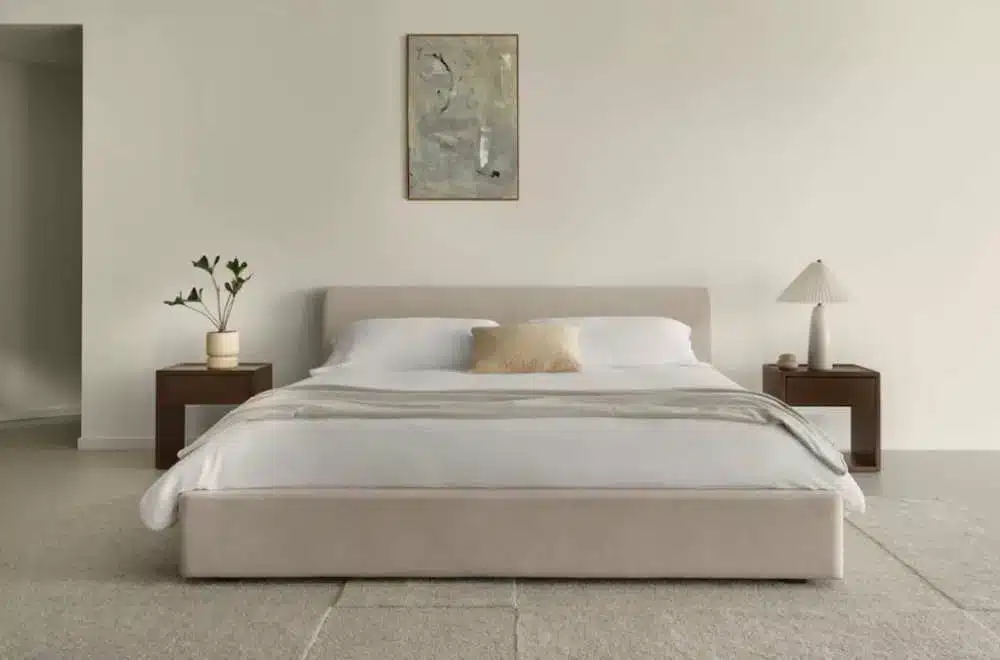
Choosing a premium wooden bed often comes down to a choice between the streamlined efficiency of a direct-to-consumer (DTC) model and the comprehensive service of traditional luxury retailers. In the current 2026 market, Thuma occupies a specific niche that prioritizes architectural simplicity over the complex sleep systems or high-ornamentation styles offered by its primary rivals.
Thuma vs. Saatva: Design-Forward Versus Sleep-System Focused
The comparison between Thuma and Saatva represents two different philosophies of bedroom investment. While Thuma focuses on the frame as a piece of minimalist furniture, Saatva approaches the bed as an extension of a medical-grade sleep system.
- Pricing: Thuma frames generally range from $1,495 to $2,495. Saatva’s upholstered frames, like the Valencia or Santorini, often start higher, typically between $1,800 and $3,000.
- Material Quality: Thuma uses upcycled rubberwood and Japanese joinery. Saatva utilizes kiln-dried hardwoods and premium foams, often emphasizing plush upholstery and “White Glove” setup.
- Warranty: Both brands offer industry-leading lifetime warranties. However, Saatva’s coverage is more comprehensive regarding sleep-health components, whereas Thuma’s is strictly structural for the wood frame.
Thuma vs. Pottery Barn and West Elm: Premium Retail vs. Direct-to-Consumer Value
When evaluating direct-to-consumer furniture value, Thuma often beats established retailers on assembly speed and material transparency, though it lacks the sheer variety found at Pottery Barn or West Elm.
- Value Proposition: Thuma removes the “retail markup” associated with showrooms and extensive sales staff. A solid wood bed from Pottery Barn, such as the Farmhouse series, can exceed $1,700 and still require complex tool-based assembly.
- Design & Support: West Elm and Pottery Barn offer hundreds of fabric and finish combinations, whereas Thuma limits buyers to a few curated wood stains. However, Thuma’s after-sales support via their Concierge team is specialized for one product line, leading to faster resolutions compared to the broad customer service departments of giant retail conglomerates.
Who Each Brand Is Best Suited For Based on Budget and Priorities:
To reduce decision fatigue, match your lifestyle to the brand’s core strength:
- Choose Thuma if: You prioritize a tool-free lifestyle, value eco-certified materials like GREENGUARD Gold wood, and move frequently. It is the best fit for those who want a silent, modern aesthetic without the headache of hardware.
- Choose Saatva if: You want a full-service experience. Their “White Glove” delivery and focus on mattress-frame synergy make them ideal for buyers who want their entire sleep environment managed and installed by professionals.
- Choose Pottery Barn or West Elm if: You are designing a specific room aesthetic and need a wide range of colors, heights, and matching furniture sets to create a cohesive, traditionally furnished home.
The Thuma Ownership Experience Beyond the Purchase

Acquiring a premium wooden bed is as much about the setup and service as it is about the sleep quality. Thuma emphasizes a frictionless “post-purchase journey,” but real-world Thuma bed ownership experience reveals a more nuanced reality regarding physical labor, customer support responsiveness, and the true longevity of the materials.
Assembly Process: How Realistic Is Tool-Free Setup?
The tool-free bed assembly is the cornerstone of the brand’s appeal. For the Classic Bed, the process involves interlocking the rails using Japanese joinery and hand-tightening two large screws to secure the center support beam.
- Verified Experience: Most owners report a setup time of 10 to 15 minutes once the pieces are unboxed.
- Friction Points: The primary challenge is not the assembly itself but the unboxing. The solid wood components are exceptionally heavy, and boxes often arrive in a “multi-piece shipment” where one box may lag a day behind the others.
- Pro-Tip: Verified users suggest assembling the frame exactly where you want it to stay; while the joints are strong, dragging the assembled frame across carpet can stress the precision-cut wood-on-wood connections.
Concierge Service and Customer Support Quality:
Thuma’s Concierge service is marketed as personalized design and logistical guidance. However, in practice, it functions as a digital-first support channel via the help@thuma.co email address.
- Support Accessibility: There is no dedicated phone line, which can be a point of frustration for buyers used to immediate retail assistance.
- Response Times: While many customers praise the team for quickly replacing parts damaged during transit, third-party reviews (such as on the BBB) highlight occasional 3 to 5-day delays in communication during peak shipping seasons.
- Personalized Guidance: The “Concierge” aspect includes 1-on-1 virtual design consultations and a trade program for professionals, which distinguishes it from the standard “help desk” of budget furniture retailers.
What Customers Say After 12 to 24 Months of Ownership:
Synthesized long-term feedback indicates that long-term bed durability remains high, though a “post-honeymoon” reality exists for specific components:
- Frame Stability: The Japanese joinery tends to tighten under the weight of the mattress, with owners reporting the frame remains silent and wobble-free even after two years of use.
- Finish Condition: The GREENGUARD Gold finish is highly resistant to minor scratches, though the natural “Walnut” and “Espresso” stains may show slight wear at the high-friction corner joints.
- Pillowboard Performance: The most common long-term critique involves the free-standing Pillowboard, which can shift or sag over time if not wedged firmly between the mattress and a wall.
How to Save at Thuma Without Overpaying or Waiting for a Sale

While Thuma pricing reflects its position as a luxury brand, savvy shoppers can reduce the total cost by utilizing year-round credits and strategic order timing. Because Thuma rarely relies on the aggressive discount cycles common in the mattress industry, maximizing value requires a more tactical approach to first-purchase offers and product bundles.
The $100 Credit for First Purchases Over $1,000:
The most consistent way to lower your initial investment is through the brand’s new customer incentive. By subscribing to the Thuma newsletter, shoppers typically receive a Thuma first-purchase credit of $100 for orders exceeding $1,000.
- Eligibility: This is generally reserved for first-time customers and requires a valid email signup.
- Limitations: The credit is a one-time use code and typically cannot be combined with other promotional codes.
- Strategy: Since the Classic Bed in a Queen size starts at $1,995, most bed purchases easily clear the $1,000 threshold, making this the most effective way to secure an immediate discount on a full-priced frame.
Thuma Sale Events and When Discounts Typically Appear:
Thuma maintains a “buy once, keep forever” philosophy that results in fewer sitewide sales than competitors. However, Thuma promotions do follow a predictable seasonal pattern centered around major holidays.
Historical data suggests that discounts of 10% to 20%, or specific dollar-off coupons ranging from $50 to $150, frequently appear during Black Friday, Cyber Monday, and Labor Day. Outside of these windows, the brand occasionally features a “Sale” section on their site where select upholstery colors or discontinued accessory finishes are offered at a reduced rate.
Bundling Products to Increase Value Per Dollar Spent:
To increase the overall maximizing value at Thuma, consider bundling the frame with essential upgrades. While Thuma does not always offer a flat “bundle percentage” discount, purchasing the Bed with a Headboard, Cushion, or Beam Side Tables ensures a cohesive aesthetic while qualifying the order for higher-tier promotional credits. Popular bundles include “The Bed + Headboard” or “The Bed + Pillowboard,” which simplify the shipping process and consolidate your investment into a single, comprehensive bedroom solution.
What to Do If a Price Drops After You Buy:
If an item you recently purchased goes on sale, Thuma’s price adjustment policy is managed through their Concierge team.
- Check the Window: Most adjustments are considered if the price drop occurs within 14 days of your original purchase.
- Contact Support: Email help@thuma.co with your order number and a screenshot of the new price.
- Verify Eligibility: Note that some holiday “flash sales” or limited-time coupon events may be excluded from retroactive adjustments.
Who Should Buy a Thuma Bed and Who Should Look Elsewhere
Determining Thuma furniture suitability involves weighing the long-term value of handcrafted joinery against the specific functional needs of your bedroom. While its “one-and-done” assembly appeal is universal, the frame is optimized for a specific lifestyle that prioritizes minimalist aesthetics and ecological responsibility.
Thuma Is a Strong Fit If You Match This Profile:
The Thuma bed recommendation is highest for those who view furniture as a multi-decade investment rather than a temporary solution.
- Design-Conscious Homeowners: If you value a clean, “Architectural Digest” aesthetic, the low-profile frame and natural wood grains provide a high-end foundation that outlasts interior design trends.
- Sustainability-Focused Shoppers: For those committed to a plastic-free, low-emission home, the GREENGUARD Gold certification and upcycled rubberwood construction offer verified peace of mind.
- The “Solo” Assembler: Because the precision-cut pieces slide together like a puzzle, it is the premier choice for individuals who want a sturdy, heavy-duty bed without needing a second person or a toolbox to complete the setup.
When Thuma Is Not the Right Choice:
As a specialized Thuma buyer guide, it is important to identify when the brand’s design philosophy creates a mismatch with your requirements:
- Tight Budgets: Despite the lifetime warranty, the $1,000+ entry price is steep. If you are looking for a functional guest bed or a short-term rental solution, the premium for Japanese joinery may not be justifiable.
- Adjustable Base Users: Most Thuma frames are designed as self-contained platform systems with fixed slats. They are generally not compatible with third-party adjustable bases, which require an open-center frame.
- Maximized Storage Seekers: While the Classic Bed offers 9 inches of clearance, those in tiny apartments needing deep, integrated “captain’s bed” drawers may find the open-underbed style insufficient.
- Latex Allergy Concerns: Since the frame is made from rubberwood (which produces latex), highly sensitive individuals should consult with the brand or a medical professional before purchasing.
Ultimately, Thuma is for the buyer who wants to delete “buy new bed” from their to-do list for the next twenty years. If you value silence, speed of assembly, and sustainable materials, it remains the gold standard of the direct-to-consumer market.
Summary:
Thuma has established itself as a leader in the sustainable furniture market by prioritizing mindful design and long-term durability. Utilizing upcycled rubberwood and a tool-free Japanese joinery system, the brand offers a curated lineup including the Classic, Essential, and Signature beds. These products are designed to address common furniture pain points like noise and complicated assembly while maintaining high environmental standards through GREENGUARD Gold and OEKO-TEX certifications.
The product analysis reveals that Thuma frames provide exceptional stability and weight capacity, supported by a lifetime structural warranty. While the tool-free assembly is highly efficient, buyers should account for a premium price point and potential hidden costs for accessories like headboards and side tables. Comparative evaluations show that Thuma offers a more streamlined, minimalist alternative to traditional retailers like Pottery Barn or sleep-system-focused brands like Saatva, though its digital-only support and lack of international shipping remain notable logistical constraints.
Final recommendations suggest that Thuma is an ideal investment for design-conscious homeowners and solo assemblers seeking an eco-friendly, multi-decade furniture solution. However, it may not be suitable for those with tight budgets, a need for adjustable base compatibility, or a preference for integrated storage drawers. To maximize value, prospective buyers should utilize the $100 new-customer credit and consider seasonal holiday promotions, ensuring they secure a high-quality platform that eliminates the need for future replacements.